Professional Diesel Turbo Repair in North Little Rock, Arkansas
Turbochargers are the backbone of modern diesel performance. They control airflow, increase power density, improve torque output, and support fuel efficiency under load. When a turbocharger begins to fail, the symptoms can range from mild power loss to severe drivability problems that threaten the entire engine. Red’s Diesel Shop provides professional diesel turbo repair for truck owners across North Little Rock and Central Arkansas who depend on consistent boost, controlled exhaust gas temperatures, and stable performance.
If your diesel truck feels sluggish under acceleration, struggles while towing, produces excessive smoke, whistles abnormally, or drops into reduced power mode, the turbo system must be inspected immediately. Continued operation under unstable boost conditions can increase exhaust temperatures, stress internal engine components, and create expensive secondary failures.
A failing turbo is rarely just a “bolt-on” issue. It is part of a larger airflow and fuel delivery system that must function correctly together.
Contact Us for Quotes & INfo
Accurate Turbo Diagnostics That Prevent Repeat Failures
Turbo replacement without diagnosis is one of the most common and costly mistakes in diesel repair. Many turbo failures are secondary to oil starvation, contamination, fuel imbalance, cooling system instability, or boost control malfunction. Simply installing a new turbo without addressing the root cause often leads to repeated failure.
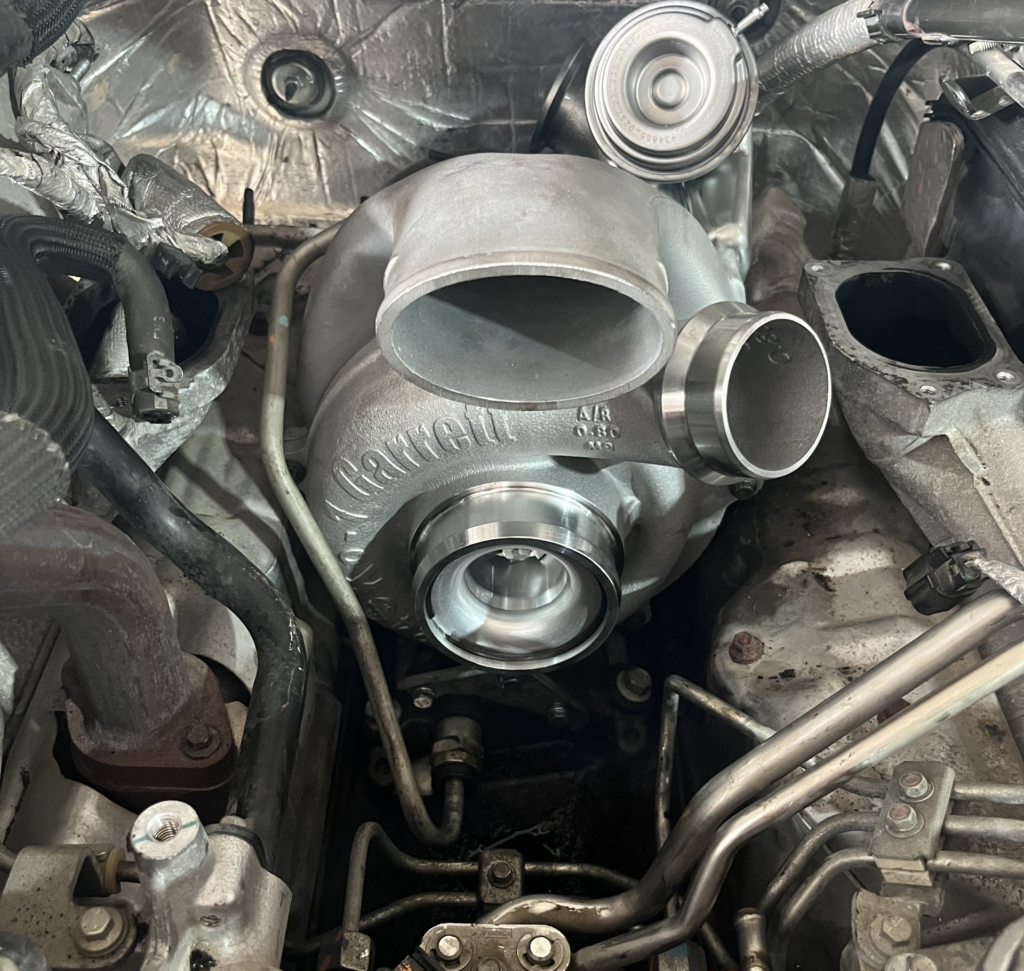
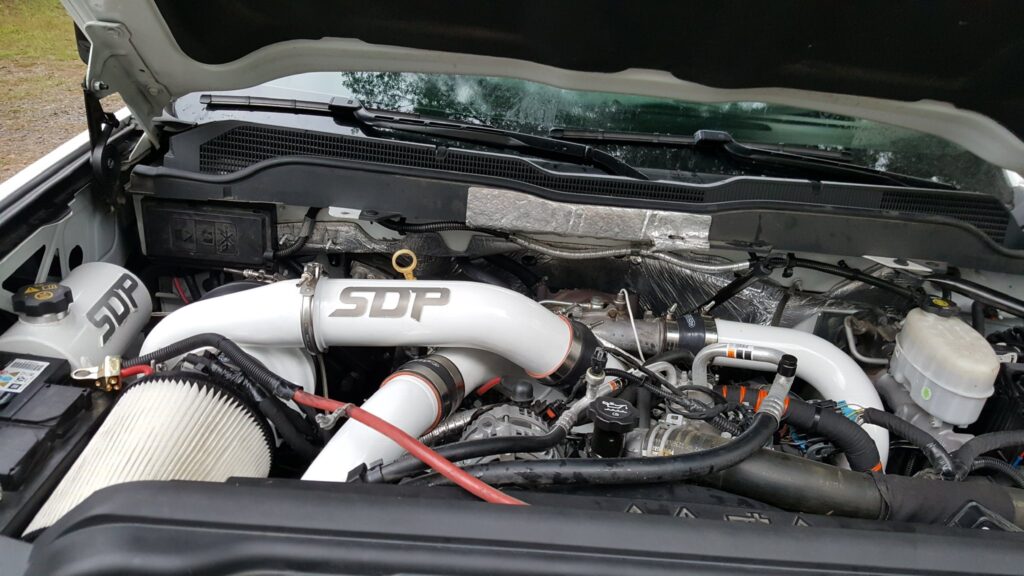
At Red’s Diesel Shop, turbo repair begins with system-level diagnostics. We evaluate boost pressure behavior under load, inspect shaft play and bearing condition, check oil supply and return lines, examine intercooler integrity, and verify actuator operation. We also inspect exhaust components that influence backpressure and turbo efficiency. The goal is not only to identify what failed, but why it failed.
Signs of Diesel Turbocharger Failure
Turbochargers typically show warning signs before total breakdown. Gradual power loss under acceleration often indicates inefficient boost production. Sudden power drop accompanied by smoke may point to seal failure or internal damage. Whining, grinding, or excessive whistle changes can indicate bearing wear or compressor contact.
Oil consumption, blue smoke under throttle, black smoke under load, or frequent limp mode activation are also indicators of airflow imbalance. In some cases, the truck may feel inconsistent, building boost intermittently or surging unpredictably. Each of these symptoms requires proper inspection before deciding on repair or replacement.
Variable Geometry Turbo and Actuator Issues
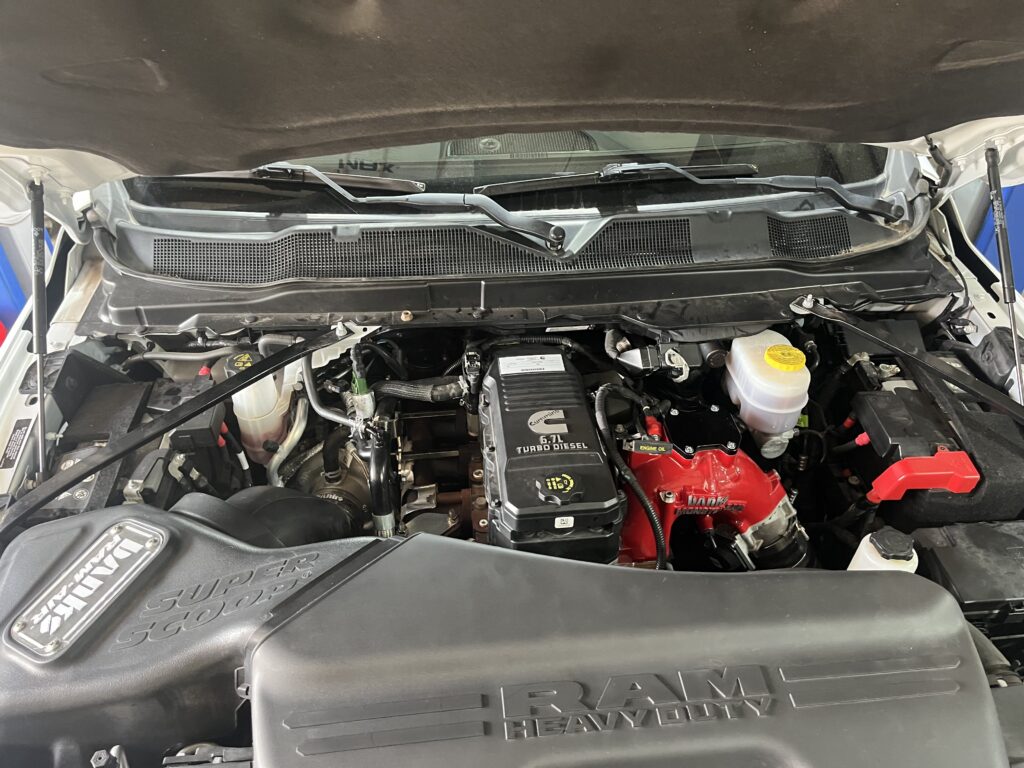
Many modern diesel engines use variable geometry turbochargers to optimize airflow across different RPM ranges. These systems rely on movable vanes controlled by actuators and electronic commands. When vane movement becomes restricted due to carbon buildup, actuator malfunction, or electronic miscommunication, boost delivery becomes unstable.
Actuator failures can cause overboost, underboost, and drivability concerns that mimic larger engine problems. At Red’s Diesel Shop, we test vane movement, actuator calibration, and electronic response to ensure correct boost control throughout the operating range.
Proper function of the variable geometry system is essential for towing stability and throttle response.
Oil Supply and Lubrication Protection
Turbochargers depend on a consistent oil supply for lubrication and cooling. Restricted oil feed lines, contaminated oil, improper viscosity, or delayed oil pressure can damage turbo bearings quickly. Oil return restrictions can also cause internal pressure buildup and seal failure.
During turbo repair, we inspect oil delivery lines, check for debris or metal contamination, and verify that the lubrication system is functioning correctly. Addressing oil supply issues prevents premature failure of replacement components.
Intercooler and Charge Air System Inspection
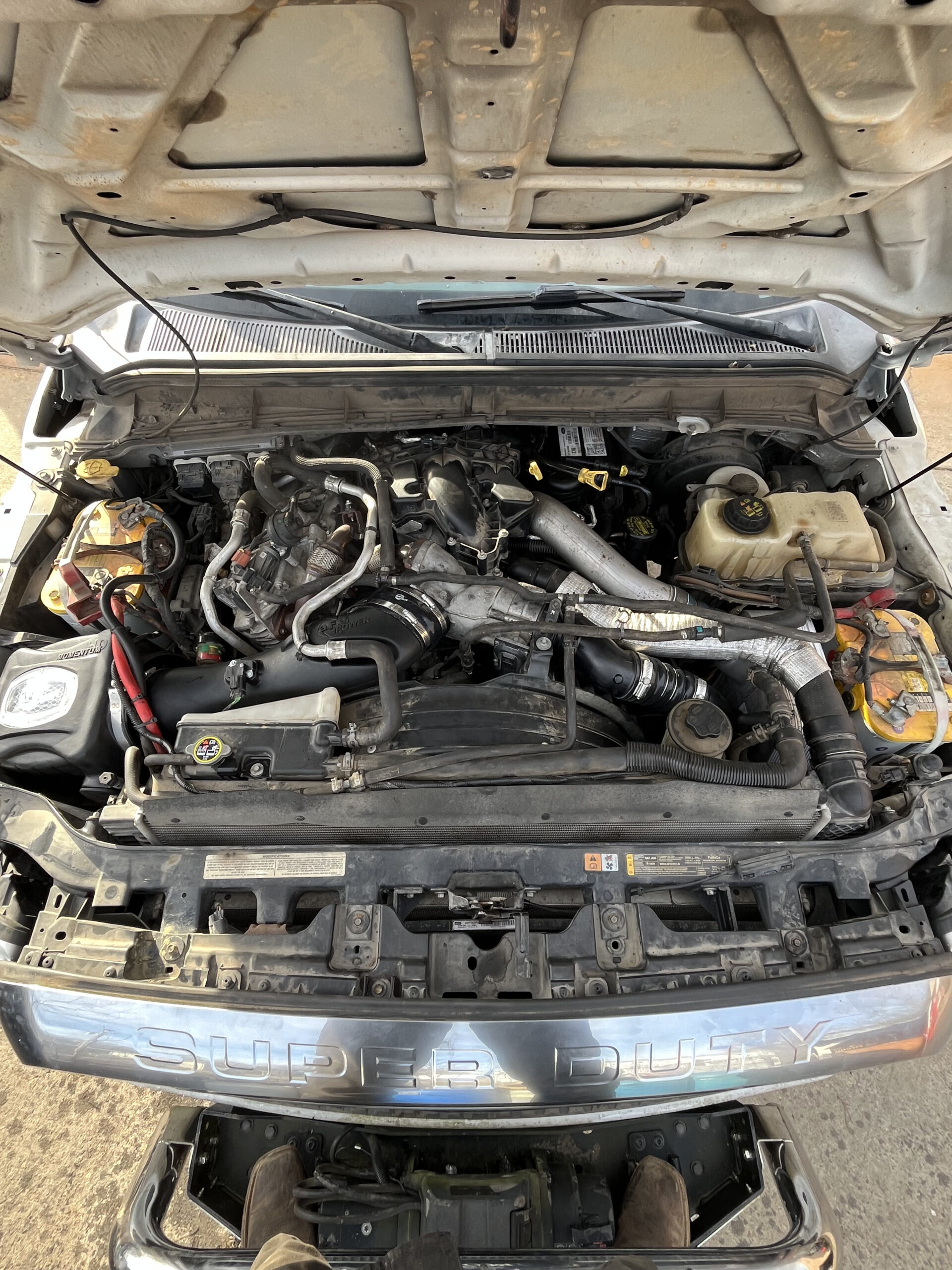
Boost pressure must travel from the turbo through the intercooler and charge air piping before entering the engine. Cracks, loose connections, damaged boots, or internal contamination can reduce effective boost and alter air-fuel ratios.
A compromised charge air system can create power loss even when the turbo itself is functional. We inspect piping integrity, pressure-test connections, and confirm that the intercooler is not restricted or oil-saturated. Ensuring airtight airflow is essential to restoring correct turbo performance.
Turbo Replacement and Upgrade Options
When a turbocharger is beyond repair, replacement must be selected carefully. Stock replacement units restore factory performance and reliability. In performance-driven applications, upgraded turbochargers can increase airflow capacity and torque potential when paired with supporting modifications.
If a customer is planning diesel performance upgrades, turbo selection must align with fueling capability, cooling capacity, and intended use. An oversized turbo without proper support can reduce drivability and increase lag. A properly matched system delivers stronger response without sacrificing durability. We guide customers through replacement options based on realistic performance goals and workload requirements.
Protecting the Engine After Turbo Failure
A failed turbo can introduce metal debris, oil contamination, and airflow imbalance into the engine system. After turbo replacement, we verify that no residual contamination remains in intake piping, intercooler components, or oil passages.
This step is critical. Skipping system cleaning increases the risk of damaging the new turbo or affecting engine performance. Our process ensures the system is restored fully before the truck returns to service.
Turbo Performance Under Real Working Conditions
Diesel trucks in North Little Rock are frequently used for towing, hauling, construction work, and long-distance driving. Turbochargers operate under sustained load in these environments. That is why testing must account for real-world stress, not just idle performance.
We confirm boost stability, throttle response, temperature control, and drivability after repair. The objective is reliable performance under load, not temporary improvement.
Keep your brakes running and working
Restore Your Boost and Protect Your Diesel Engine
If your truck is experiencing power loss, excessive smoke, unusual turbo noise, or repeated boost-related codes, contact Red’s Diesel Shop today. Call (501) 243-0190 or visit 6128 Carnegie Dr, Suite B, North Little Rock, AR 72117 to schedule professional diesel turbo diagnostics.
Proper turbo repair protects your engine, restores torque, and prevents costly breakdowns. When boost matters, precision matters.
